What is a virtual power plant?
A virtual power plant (VPP) is a network of home batteries, linked by software, that an energy company can call on together — like one large power station, except it's made of thousands of ordinary homes.
When the grid is under pressure (usually the late-afternoon and evening peak), the operator draws a small slice of stored energy from each connected battery at once. You're paid for that energy, and you keep a backup reserve.
How it works for your home
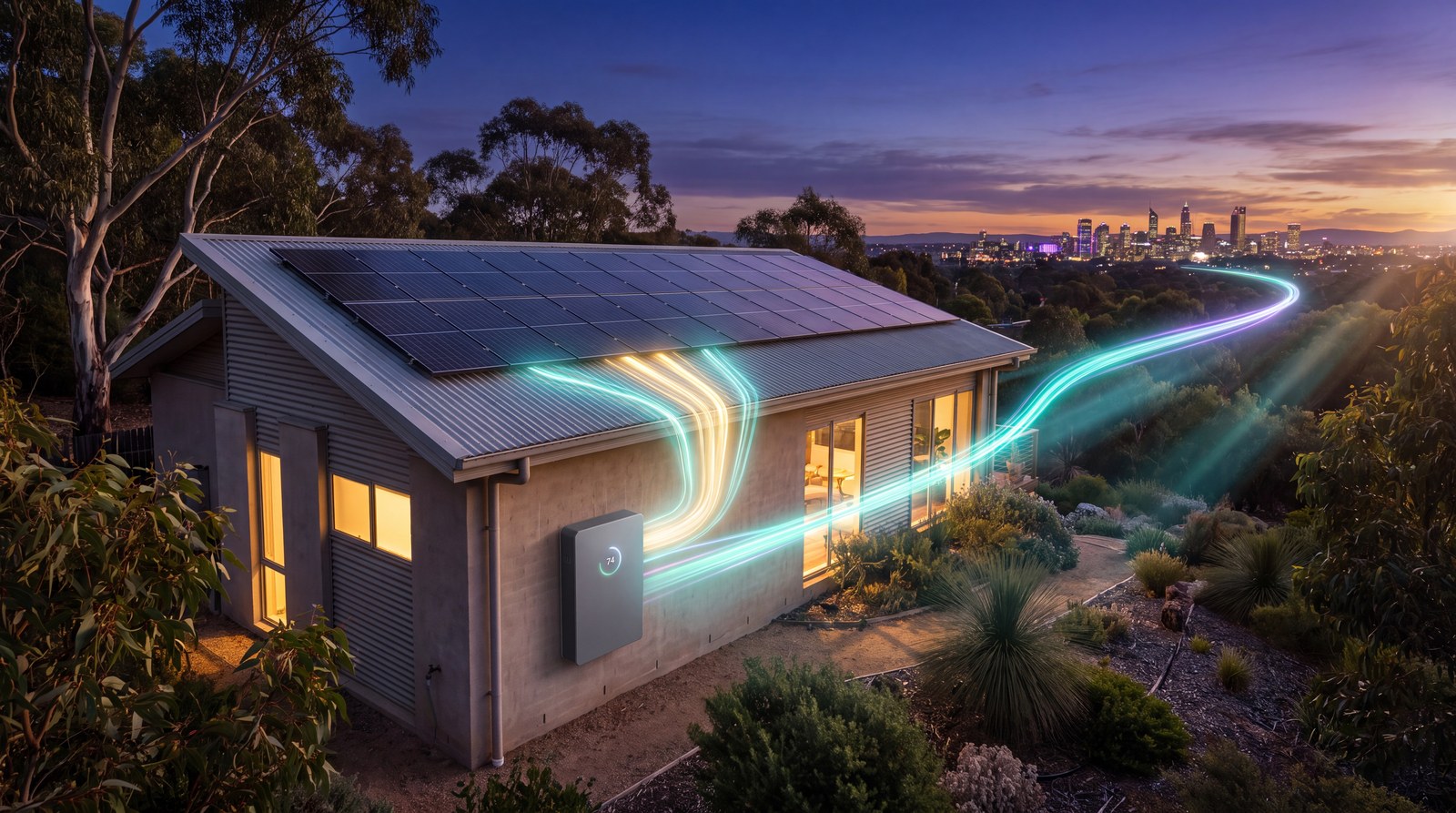
1 · Your battery charges
From your rooftop solar by day, or cheap off-peak power overnight.
2 · A grid event happens
At a peak the operator dispatches a slice of your stored energy — events are short (1–4 hrs) and infrequent.
3 · You're rewarded
Bill credits, a per-kWh payment, or wholesale value — and you keep a minimum reserve.
What you need to join: a compatible home battery, a reliable internet connection, and — for most plans — to be on the operator's electricity plan. This site covers residential VPPs only (not commercial or grid-scale programs).
How a battery gets approved for a VPP
Meet the standards
Inverter certified to AS/NZS 4777.2, battery on the CEC list, VPP-capable firmware, network export rules met.
Integrate the platform
Each retailer runs its VPP on an orchestration platform (Evergen, GreenSync, SwitchDin…). The brand must connect to it.
Pass live testing
The brand runs a cohort of real homes through a monitored trial before general release.
Get listed
The retailer adds the brand to its published compatibility list.
Where the DNSP comes in
Your DNSP (the company that owns the poles and wires) approves the grid connection and sets how much you can export — separate from your retailer and the VPP. Many now require flexible (dynamic) exports, where the network adjusts your export limit in real time. Their rules differ by region, which is one reason VPP behaviour varies across Australia.
We only mark a battery "connected" when the operator officially says so — otherwise it's shown as "pending", neutrally. Check your battery →